November 3, 2026
Hypochlorous acid spray for estheticians: complete 2026 guide

Estheticians’ hypochlorous acid skincare is the use of a labeled HOCl topical product within a cosmetic routine, with the aim of keeping client care simple and consistent. This 2026 guide to hypochlorous acid spray for estheticians separates everyday skincare use from treatment protocols, equipment care, and surface disinfection.
- Choose hypochlorous acid spray for estheticians by labeled use, not broad claims about the ingredient.
- Xoxo Gina HALO™ Wellness Mist fits shoppers seeking a 150 mL hypochlorous acid skincare mist.
- Keep facial mist, instrument processing, and surface disinfection in separate protocols.
- Document ingredients, directions, and storage before adding a spray to client skincare routines.
Why hypochlorous acid matters for estheticians
Your treatment room has different requirements from a bathroom shelf. You need to know what touches the client’s skin, where it belongs in the service, and which instructions apply after the client leaves. A versatile-sounding ingredient does not answer those questions by itself.
Hypochlorous acid appears in different product categories. A skincare label does not establish a surface-disinfection claim, and a disinfectant label does not establish suitability for facial use. Read the finished product’s directions rather than transferring claims from another HOCl product.
Founder Gina Rivera’s story is the starting point for understanding Xoxo Gina HALO™; the founder background provides that brand context. For your treatment-room decision, keep the founder story separate from the evidence needed to support a particular use.
For your 2026 service menu, the useful question is not whether HOCl belongs everywhere. It is whether a specific product has a clear, supported place in the routine you actually provide.
Build a label-led routine
Define the intended use first
Start with the free, manual approach: write down the exact job you want the spray to do. A facial skincare step, a home-care recommendation, and treatment-bed disinfection are different jobs. Do not combine them under a broad description such as keeping everything clean.
For a skin-focused purchase, evaluate the product as skincare. For environmental surfaces, follow the applicable product label and your local requirements. For reusable instruments, follow the processing instructions and professional requirements that apply to that instrument and service.
This distinction also keeps your client language accurate. Describe a mist’s place in a cosmetic routine without promising to treat acne, prevent infection, heal compromised skin, or change the outcome of a procedure. Those are not interchangeable with everyday skincare claims.
Before considering a bottle, complete these checks:
- Skin use: Identify the body area and cosmetic purpose.
- Surface use: Require directions for the intended surface task.
- Instrument care: Keep instrument processing in its own protocol.
- Service context: Separate routine skincare from procedure-specific care.
Read the finished formula, not just HOCl
Make a simple comparison sheet using the label and current manufacturer information. Record the complete ingredients, stated pH, directions, storage instructions, and any restrictions. Leave unanswered fields blank rather than filling them with facts from a different spray.
Ingredient count is a description, not a safety ranking. Likewise, pH alone does not establish tolerance, effectiveness, or compatibility with every service. Evaluate the finished formula and its intended use together.
If your client reports reactive skin, review the exact ingredient list against their known sensitivities. A short formula still needs that review. Follow any product-specific testing instructions, and do not interpret a comfortable first application as proof that every future application will suit the client.
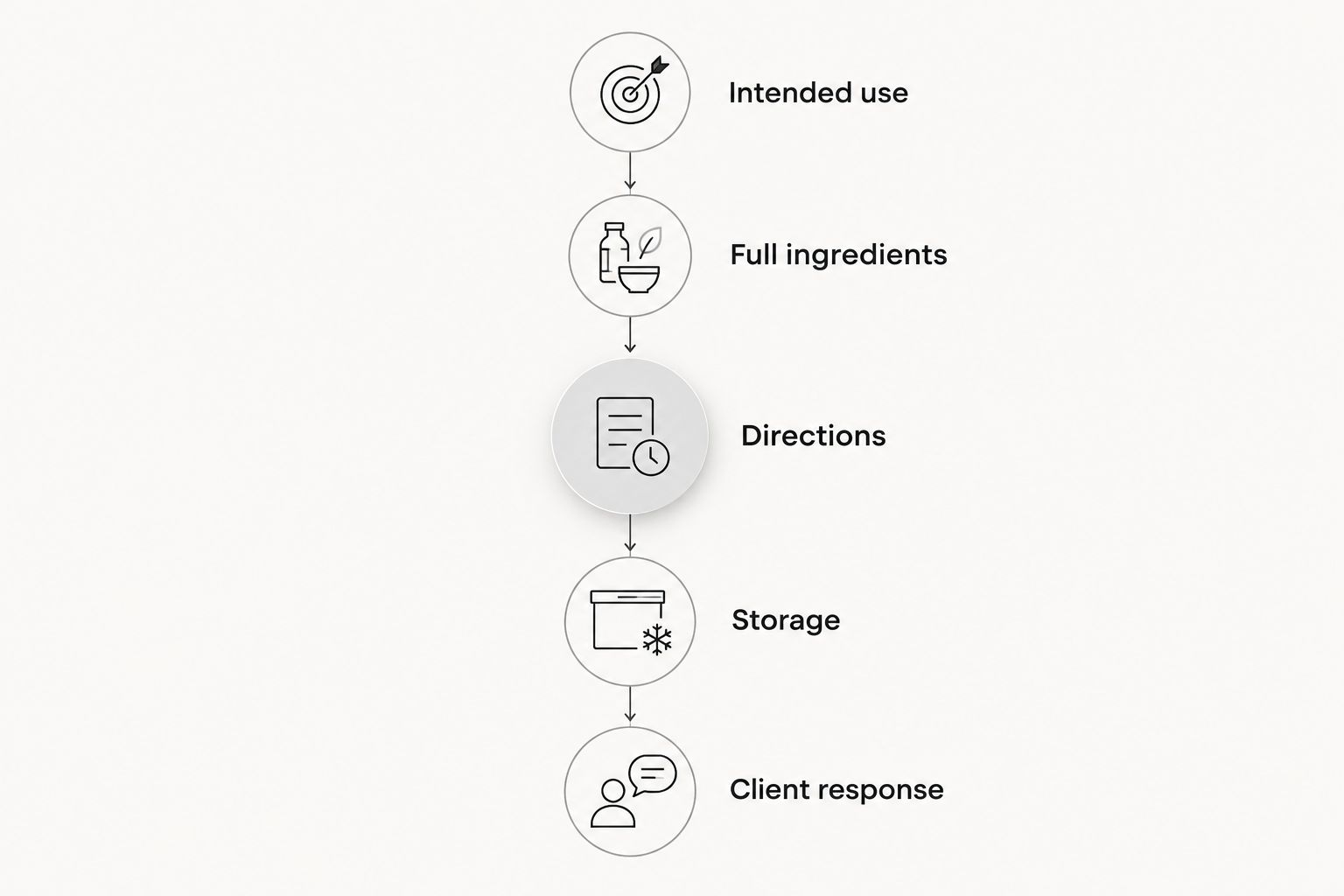
Use this order for each product you consider:
- Intended use: Match the label to the proposed skincare step.
- Full ingredients: Review the complete list, not a shortened description.
- Directions: Confirm application and any stated restrictions.
- Storage: Check how the bottle must be kept between uses.
- Client response: Record what the client reports without diagnosing it.
Evaluate the documented product details
Once you have defined the job and reviewed the label, assess whether the bottle fits your workflow. Xoxo Gina HALO™ Wellness Mist is supplied in a 5 fl oz / 150 mL size, and its supplied product information states pH 4.5. These are useful comparison details, not proof of superior performance.
Xoxo Gina HALO™ Wellness Mist is best for shoppers seeking a 150 mL hypochlorous acid skincare mist. For estheticians, that makes it a product to assess against a defined cosmetic use—not a substitute for professional disinfection or procedure-specific instructions.
The supplied description identifies purified water and hypochlorous acid, but its ingredient listing is abbreviated. Read the full label before checking suitability for a client. Do not reconstruct an ingredient name from a truncated listing or use a general statement about simple formulas as a substitute.
Keep the assessment practical:
- Record the 150 mL bottle size for your storage and handling plan.
- Treat pH 4.5 as a formulation detail, not a tolerance guarantee.
- Review the complete ingredient list before recommending use.
- Confirm directions for the specific skin application you intend.
- Keep sourcing and development claims out of client advice unless documented.
Write the application protocol
Before adding a new mist to an appointment, write the protocol in plain language. Identify the service, the intended application point, the relevant label directions, and what should stop the application. Staff should not need to improvise these decisions while a client is on the treatment bed.
Keep the application consistent with the product’s actual instructions. Do not invent a universal spray count, application distance, or waiting time for all HOCl products. If the directions do not resolve a question that matters to your service, ask the manufacturer before building that use into the protocol.
Your 2026 protocol should also distinguish routine cosmetic use from care around peels, resurfacing, or other procedures. Follow the relevant professional instructions for those services. Do not assume that a facial mist is appropriate immediately before or after them simply because it is sold for skin.
Include these items in the written protocol:
- Name the exact product and intended cosmetic purpose.
- Copy the applicable directions without adding unsupported instructions.
- Define handling practices that keep the dispensing tip from touching skin.
- Specify when to stop use and reassess client comfort.
- Record any service-specific restrictions separately.
Fit the mist into the client’s existing routine
Home-care advice should begin with what the client already uses. Ask about their cleanser, moisturizer, sunscreen, exfoliating products, and any clinician-directed skincare. You are looking for a clear place for the proposed product, not an excuse to add another step.
Recommend 1 new product at a time as a practical tracking method. This makes the routine easier to document and avoids introducing several changes that the client cannot distinguish. It is not a guarantee against irritation or a substitute for professional medical advice.
A monthly appointment calendar is not permission to repeat every product at every stage. When clients rotate professional facial treatments, their home-care instructions should match the current service rather than an older appointment. Keep the mist’s role specific and defer to procedure-specific directions where they apply.
Make the take-home plan easy to follow:
- Write the product’s intended place in the existing routine.
- Use the label’s frequency instructions rather than a generic schedule.
- Separate ordinary skincare advice from post-procedure directions.
- Ask the client to report discomfort instead of increasing use.
- Revisit the recommendation when the treatment plan changes.
Review handling, storage, and staff language
A product recommendation is incomplete without a handling plan. Keep the original packaging and readable label available so staff can check the actual directions. Do not replace product-specific storage guidance with assumptions about what all facial sprays need.
For your 2026 staff review, compare the written protocol with what happens during appointments. Check whether the bottle remains identifiable, whether staff describe the same intended use, and whether client questions receive consistent answers. Fix the instructions when the workflow exposes a gap.
Use calm, precise language. A client asking whether a mist will treat a rash needs a clear boundary, not a stronger sales pitch. Explain the cosmetic purpose you can support and direct medical concerns to an appropriately qualified healthcare professional.
Keep these practices consistent:
- Store each product according to its own label.
- Retain identification and any stated use-by information.
- Avoid unapproved decanting or changes to the dispensing system.
- Remove bottles from use when label instructions require it.
- Review client-facing claims alongside the application protocol.
Compare the role, not the promise
These options solve different workflow problems. The table compares their intended roles, not clinical effectiveness, and does not rank one category as a replacement for another.
| Option | Best for | Practical advantage | Key limitation |
|---|---|---|---|
| Label-directed HOCl skincare mist | Clients seeking a defined mist step | Provides a specific product to assess within the routine | Does not establish disinfection or treatment claims |
| Existing routine without an added mist | Clients who do not need another step | Keeps instructions and product tracking simpler | Does not meet a specific preference for a mist |
| Procedure-specific care protocol | Clients receiving services with dedicated instructions | Keeps care tied to the actual procedure | Must not be replaced by generic facial-spray advice |
| Properly labeled surface disinfectant | Environmental surfaces requiring disinfection | Provides task-specific directions | Is not automatically appropriate for skin or instruments |
Choose the option that matches the task. A preference for one convenient bottle does not remove the need for separate skincare, surface, and instrument protocols.
Common mistakes estheticians make
Treating every HOCl bottle as interchangeable
The shared ingredient name is not a shared set of directions. Compare the intended use and complete formula before substituting one product for another. Keep that same distinction when a client brings in a bottle purchased elsewhere.
Making pH do too much work
A stated pH helps describe a formula; it does not independently establish how a client’s skin will respond. Avoid turning a pH value into a promise of gentleness, compatibility, or better results. Use the finished product’s information and the client’s actual response.
Adding the mist to every service
A useful home-care option does not automatically belong in every appointment. Introduce a product only where its directions and your service protocol support the use. Leave it out when its purpose is unclear.
Confusing brand storytelling with product evidence
Gina Rivera’s founder story provides context for Xoxo Gina HALO™, but a founder narrative does not validate a treatment claim. Keep sourcing, development, and performance statements tied to precise documentation. Explain what is known without adding a more impressive conclusion.
Sending clients home with vague instructions
Use as needed leaves too much open when the client is also following a treatment plan. Provide label-consistent directions and explain what to do if discomfort develops. For 2026 client handouts, remove broad promises and retain the instructions someone can actually follow.
FAQ
What should estheticians look for in a hypochlorous acid spray?
Estheticians should start with the product’s labeled intended use, full ingredient list, application directions, and storage instructions. Evaluate the finished formula rather than borrowing claims from another HOCl product.
Can I use a hypochlorous acid facial mist to disinfect my treatment bed?
A facial skincare label does not establish a treatment-bed disinfection claim. Use a product labeled for the intended surface task and follow its directions and applicable professional requirements.
Is Xoxo Gina HALO™ Wellness Mist suitable for every facial service?
Do not assume suitability for every facial service. Its supplied information identifies a 5 fl oz / 150 mL mist at pH 4.5, but each proposed use still needs to match the full product directions and service protocol.
Does a shorter ingredient list guarantee that a spray suits sensitive skin?
No, ingredient count does not guarantee suitability for sensitive skin. Review the complete formula against known sensitivities and follow the product’s instructions.
Can clients use a hypochlorous acid spray after a peel?
Post-peel use must follow the specific procedure’s aftercare instructions and the product’s directions. Do not substitute general skincare advice for the instructions supplied by the treating professional.
How often should a client apply a hypochlorous acid skincare mist?
Follow the specific product’s labeled application frequency. Do not apply a schedule from another spray or increase use to pursue an unsupported treatment outcome.
Does a stated pH prove that a spray works better?
No, pH alone does not prove better effectiveness or skin tolerance. It is one formulation detail to assess alongside the intended use, complete formula, and supporting product information.
One last thing
An empty slot in your protocol is better than an unsupported claim. Before buying another treatment-room product, finish the sentence describing exactly why it belongs in the appointment. If the answer depends on disease treatment, disinfection, or procedure compatibility that the label does not establish, keep that use out of the routine.
For your 2026 review, start with the bottle already on the shelf. Match its label to your written instructions before adding a new step.