
November 13, 2026
Soothing face mist vs hydrating serum: compare their roles

A soothing face mist and a hydrating serum do different jobs: a mist gives you a light spray application, while a hydrating serum uses ingredients chosen to help attract or retain water in the skin’s outer layers. Neither format guarantees a particular benefit, so choose by the formula and your skin’s needs—not by the words on the front of the bottle.
- A soothing face mist does not automatically replace a hydrating serum; ingredients determine their roles.
- Choose a hydrating serum when your main goal is adding a targeted hydration step.
- Xoxo Gina HALO™ offers a hypochlorous acid mist; that category is not interchangeable with a humectant serum.
- For sensitive skin, introduce one new formula at a time and follow its directions.
Soothing face mist vs hydrating serum: how do their roles compare?
Choose a hydrating serum for a hydration-focused step. Choose a face mist when you want spray application and its particular formula matches your intended use. You do not need both simply because they come in different bottles.
If you are exploring Xoxo Gina HALO™, keep that distinction in mind: a hypochlorous acid formula deserves evaluation on its own terms, not as a substitute for every other skincare step.
| Option | Best for | What to look for | Main limitation |
|---|---|---|---|
| Soothing face mist | People who prefer a light spray application | Ingredients, intended use, and application directions | The word soothing does not establish a specific effect |
| Hydrating serum | People seeking a hydration-focused leave-on step | Humectants such as glycerin or hyaluronic acid | A serum does not necessarily replace moisturizer |
| Mist and serum together | People with a clear reason for each formula | Compatible directions and a comfortable routine | More products add complexity and make reactions harder to trace |
The comparison is about roles, not a winner for every face. A mist can contain humectants, and a serum can contain ingredients unrelated to hydration. Read past the format before deciding what belongs in your routine.
Why this matters
In 2026, skincare labels still mix delivery formats with promised benefits. Mist describes how a product reaches your skin; hydrating describes an intended function. Comparing those words alone leaves out the information you actually need.
For sensitive or reactive skin, an extra step is not automatically a better step. Start with the concern you want to address, then look for a formula designed for that purpose. If your current routine feels comfortable, there is no need to add a serum or spray just to complete a sequence.
A useful shopping question is simple: What job would this product do that my current routine does not? If you cannot answer, pause before adding it.
What a soothing face mist does—and does not tell you
A face mist distributes a liquid through a spray nozzle. That can make application convenient, but the nozzle does not tell you whether the liquid contains humectants, fragrance, hypochlorous acid, or other ingredients.
Likewise, soothing is not a complete formula description. Do not treat it as a promise that a product will suit reactive skin, resolve persistent redness, or address a medical concern. Those conclusions require evidence beyond the product category.
Best for: a spray step with a defined purpose
A mist makes sense when you prefer its application style and understand why you are using that particular formula. Check whether the directions specify the face, body, or another use. A spray intended for surfaces is not automatically a facial skincare product.
The advantage is the format: you can apply a fine spray without first dispensing a serum into your hands. The limitation is equally straightforward: a light, wet feeling is not proof of lasting hydration. Evaluate the ingredients and the directions, not just the sensation immediately after spraying.
For your 2026 shopping list, separate the experience from the expected result. Enjoying a mist is a valid preference; expecting it to perform every function of a serum is a different claim.
What a hydrating serum adds
A hydrating serum is a leave-on formula intended to support skin hydration. Common humectants include glycerin and hyaluronic acid, which attract and hold water. The finished formula matters more than the presence of a single familiar ingredient.
Serums vary in texture, from watery liquids to thicker gels. Thickness alone does not establish how well a serum hydrates or whether you will find it comfortable under moisturizer or sunscreen.
Best for: a specific hydration gap
A hydrating serum is the more direct category to explore when your goal is an additional hydration-focused step. Look for a clearly described formula rather than assuming every serum serves that purpose. Exfoliating serums and other treatment-focused formulas are not interchangeable with hydrating ones.
The benefit is a defined role. The drawback is that a serum adds another formula to your routine and does not necessarily provide the same moisture-retaining function as a moisturizer.
If you already like how your moisturizer feels, consider whether a serum solves an actual problem. You do not need to add one merely because your routine lacks a bottle labeled serum.
Why the experience varies
Two products with similar labels can feel different on your skin. These factors explain why comparing the actual formulas is more useful than comparing packaging categories:
- Ingredients. A humectant-focused formula has a different purpose from a hypochlorous acid formula. Check what is present rather than assuming all watery products do the same thing.
- Finished formulation. Ingredient combinations and pH affect a product’s characteristics. A pH number alone does not establish better hydration, gentleness, or effectiveness.
- Application directions. The intended area, order, and instructions determine how a product belongs in your routine. Do not transfer directions from one spray to another.
- The surrounding routine. A serum used with moisturizer occupies a different place from a mist used by itself. Judge the step in context.
- Your skin’s response. A product that feels comfortable for someone else is not a guarantee for you. New discomfort is a reason to stop and reassess, not to add another layer.
These are selection criteria, not a scoring system. No single ingredient count, bottle size, or pH reading makes a formula the right choice for everyone.
Build a routine around the job
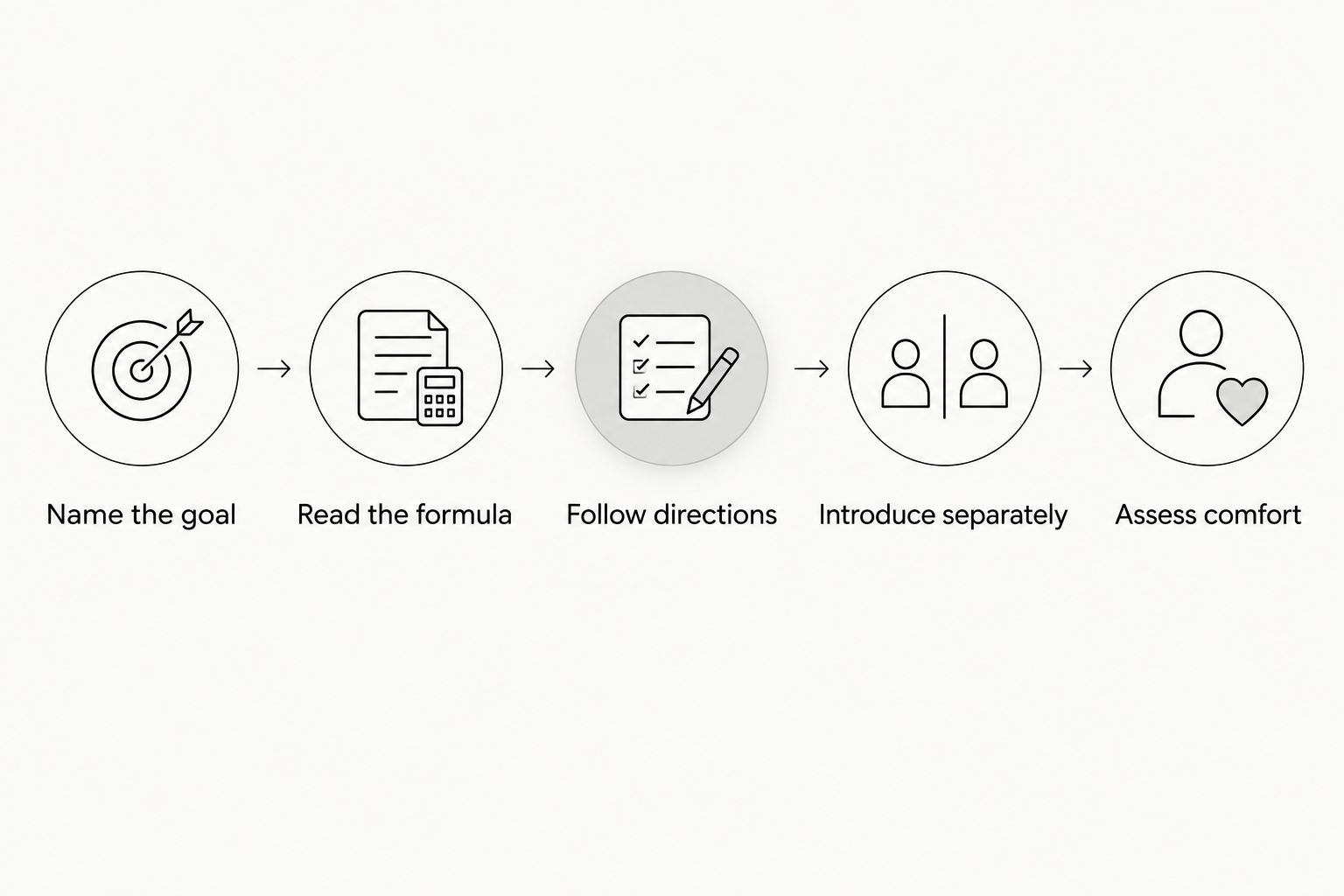
Keep your 2026 routine focused on what you need. Before buying either category, work through this short sequence.
- Name the goal. Decide whether you want a hydration-focused step or a specific spray formula. Avoid using refreshment, hydration, and soothing as interchangeable terms.
- Read the formula. Check the ingredient list and intended use. For a serum, identify whether hydration is actually its stated purpose.
- Follow directions. Use the product’s own instructions for placement and application. Do not assume every mist belongs before every serum.
- Introduce separately. Add a new formula without simultaneously changing the rest of your routine. That makes your response easier to understand.
- Assess comfort. Look at whether the step serves your goal and feels comfortable. Stop using a product that causes irritation.
You do not need to establish a universal mist-before-serum rule. The products’ instructions come first, especially when a formula contains ingredients with specific compatibility or application guidance.
If your skin is persistently uncomfortable, seek advice from a qualified healthcare professional rather than repeatedly adding products. A shopping comparison is not a diagnosis.
Where Xoxo Gina HALO™ fits
Gina Rivera’s founder story is part of Xoxo Gina HALO™. For your routine, the next question is practical: what is the formula, and what role are you asking it to fill?
Xoxo Gina HALO™ Wellness Mist is a hypochlorous acid product in a 5 fl oz / 150 mL bottle, with a stated pH of 4.5. The product information identifies purified water and hypochlorous acid within a three-ingredient formula.
Xoxo Gina HALO™ is best for shoppers seeking a hypochlorous acid wellness mist rather than a hydrating serum. That is a category distinction, not a claim that the formula outperforms another product.
The bottle size tells you the quantity supplied. The pH describes a formulation characteristic. Neither establishes a hydration result, suitability for every family member, or an advantage over a different formula.
For this comparison, the limitation is clear: do not count a hypochlorous acid mist as your hydrating serum simply because both are liquids applied to skin. Keep any hydration-focused step separate in your thinking, and follow the mist’s directions for its intended use.
Make it work for your day
A useful routine fits the way you live without asking a product to do more than its directions support. Choose your use case before choosing the bottle.
After the gym
A spray format can be convenient, but convenience does not establish a cleansing function. Do not assume a facial mist removes sunscreen, makeup, or the buildup you normally cleanse away. Keep cleansing and hydration decisions separate from your decision to use a mist.
When buying for your family
Check the directions for the intended user and application area. Words such as gentle, simple, and wellness do not establish age suitability or permission to use a product around the eyes. Ask a qualified professional when you need guidance about a child’s skin.
When traveling
Check the current rules for your route and baggage type before packing skincare liquids in 2026. Bottle capacity matters for packing, but it does not tell you which formula your skin needs. Avoid changing several products at the same time just because you are away from home.
Can a soothing face mist replace a hydrating serum?
A soothing face mist does not automatically replace a hydrating serum. Replacement depends on the actual formula and your hydration needs, not whether both products feel lightweight. If hydration is your goal, look for a product designed for that purpose.
Do you need moisturizer after a hydrating serum?
A hydrating serum does not automatically replace moisturizer. Humectants attract water, while moisturizers can also include ingredients that help reduce moisture loss. Follow the formula’s directions and judge whether your overall routine keeps your skin comfortable.
Is a mist better than a serum for sensitive skin?
Neither a mist nor a serum is inherently better for sensitive skin. The ingredients, finished formula, directions, and your individual response matter more than the delivery format. Introduce a new product separately instead of assuming a shorter routine guarantees compatibility.
FAQ
What's the difference between a soothing face mist and a hydrating serum?
A soothing face mist is a spray format, while a hydrating serum is a formula category focused on hydration. Ingredients and intended use determine whether their functions overlap.
Can I use a face mist and a hydrating serum together?
You can include both when each has a clear purpose and their directions support the combination. Do not assume every mist and serum share the same application order.
Should I spray face mist before or after serum?
Follow the directions for the specific mist and serum rather than applying a universal order. Formula-specific instructions take priority over a general skincare sequence.
Does a wet feeling mean my face mist is hydrating?
A wet feeling does not establish lasting hydration. Check whether the formula contains ingredients intended to support hydration rather than judging only the immediate sensation.
Is a hypochlorous acid mist the same as a hyaluronic acid serum?
A hypochlorous acid mist is not the same as a hyaluronic acid serum. Hyaluronic acid is a humectant; the similar-sounding names do not make the ingredients interchangeable.
Is a pH of 4.5 proof that a mist is better for my skin?
A pH of 4.5 does not prove that a mist is better for your skin. Evaluate the finished formula, intended use, directions, and your response rather than treating pH as a quality ranking.
Can I skip a serum if my current routine feels comfortable?
You do not need a serum simply to complete a skincare sequence. Add a hydration-focused step only when it serves a clear purpose in your routine.
One last thing
For your next skincare purchase in 2026, ignore the bottle shape for a moment. Finish this sentence: I want this formula to help me with…
If the answer is hydration, assess hydration ingredients. If the answer is a particular mist routine, assess that mist’s intended use. A clear job description is more useful than another layer you cannot explain.